The Power of Optical Fibers: Lighting Up Our Connected World.
Introduction
Imagine sending thousands of messages, streaming videos, or even performing remote surgery—all at the speed of light. This is made possible by optical fiber technology, one of the most important innovations in modern communication and technology. In this blog, we’ll explore how optical fibers work, their key principles, and how they are transforming industries like communication, medicine, and technology.
What Are Optical Fibers?
Optical fibers are thin strands of glass or plastic that transmit data as light signals instead of electrical signals. They are incredibly fast, efficient, and capable of carrying massive amounts of information over long distances.
Principles Behind Optical Fibers
1. Total Internal Reflection
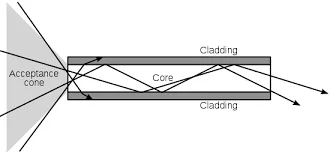
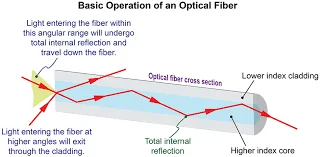
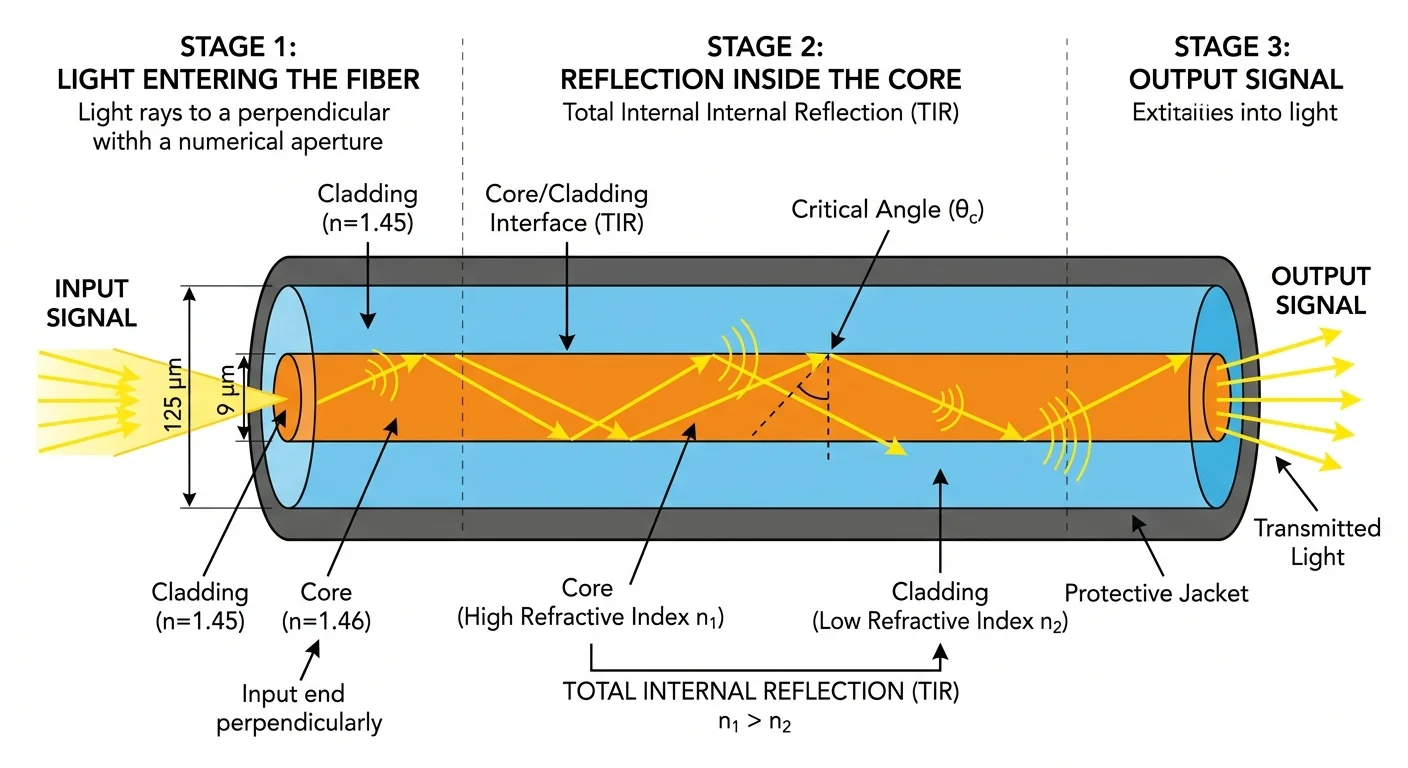
The core principle is total internal reflection, where light bounces inside the fiber
without escaping. This allows signals to travel long distances with minimal loss.
2. Structure of Optical Fiber
Core: Carries the light
Cladding: Reflects light back into the core
Protective Layer: Shields the fiber from damage
How Do Optical Fibers Work?
Data is converted into light signals using a laser or LED.
Light travels through the fiber by reflecting internally.
At the receiving end, the light is converted back into electrical signals.
Applications of Optical Fibers
1. Communication
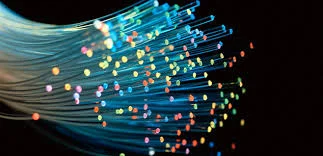
Internet and broadband connections
Cable TV and telephone systems
High-speed data transfer
Example: Your home Wi-Fi often relies on fiber-optic cables for fast internet.
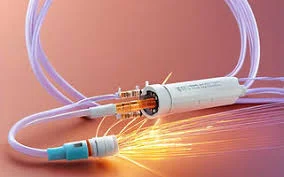
2. Medicine
Endoscopy (viewing inside the body)
Laser surgeries
Medical imaging
Example: Doctors use fiber optics to perform minimally invasive surgeries.
3. Technology
Data centers
Military communication
Sensors and robotics
Example: Cloud storage services depend on fiber optics for fast data access.
Infographic Idea
Quick Quiz (Interactive)
1. What principle allows light to travel inside optical fibers?
A) Refraction
B) Total Internal Reflection
C) Diffraction
D) Absorption
2. What carries the light in an optical fiber?
A) Cladding
B) Core
C) Jacket
D) Air
3. Which field uses optical fibers for surgeries?
A) Agriculture
B) Medicine
C) Transport
D) Construction
Answers: 1-B, 2-B, 3-B
Why Optical Fibers Matter
Optical fibers are the backbone of modern communication. Without them, we wouldn’t have:
High-speed internet
Instant global communication

Advanced medical technologies
They are shaping the future of smart cities, AI, and global connectivity.
Conclusion
From powering the internet to saving lives in hospitals, optical fibers are truly revolutionary. As technology continues to evolve, their importance will only grow—making our world faster, smarter, and more connected.