A Water Spray Booth is an essential part of many industrial painting operations because it helps control overspray, improve air quality, maintain coating quality, and support environmental compliance. However, like any industrial system, its performance depends heavily on proper maintenance. A well-maintained booth can operate efficiently for many years, while neglected maintenance can lead to reduced overspray collection efficiency, poor airflow, increased operating costs, equipment damage, and lower paint quality. Industries that rely on consistent painting performance must therefore establish regular maintenance procedures to keep the Water Spray Booth operating at its best and ensure reliable long-term performance.
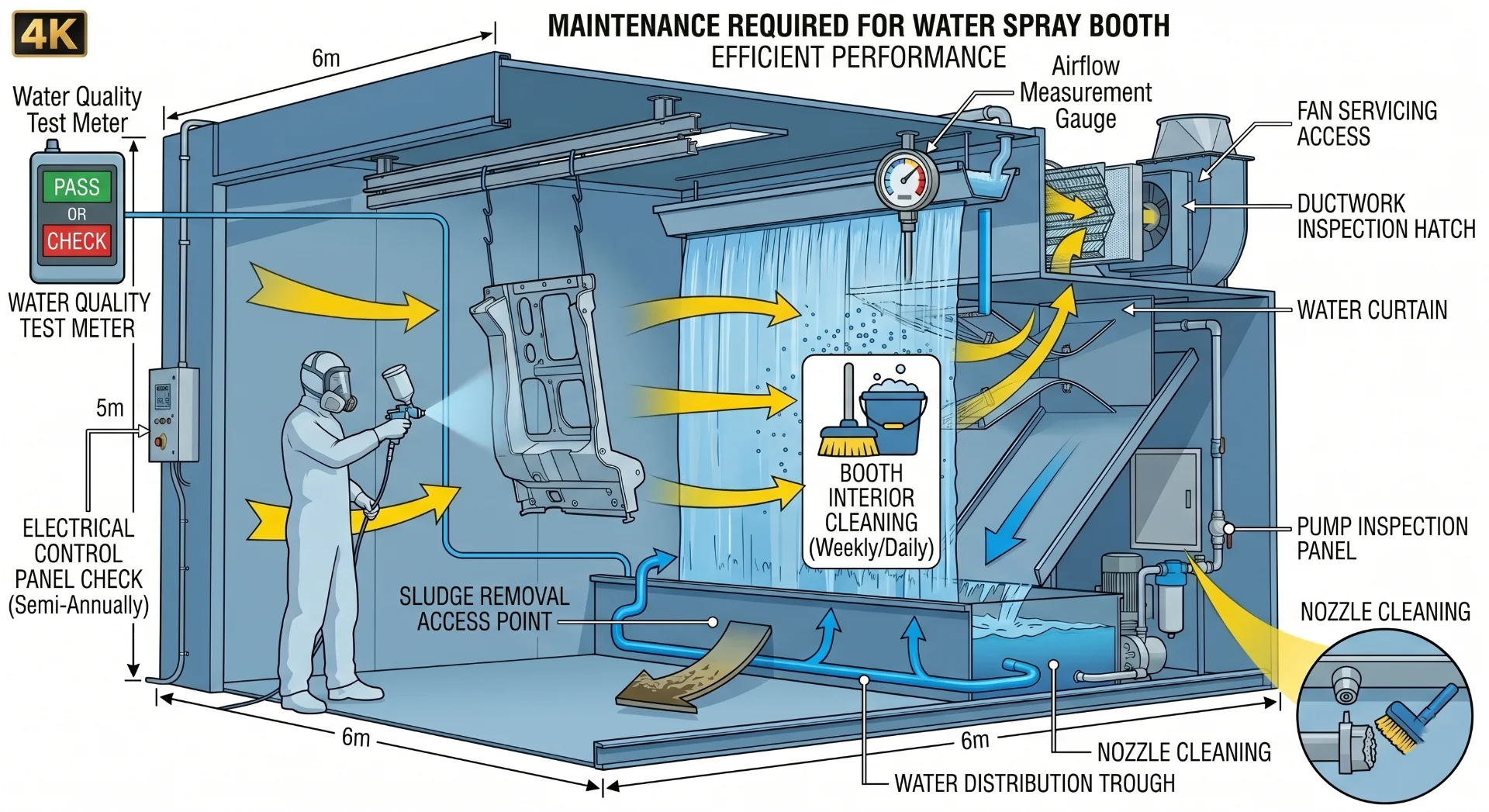
One of the most important maintenance tasks is monitoring and maintaining water quality. Since the booth uses water to capture paint overspray, paint particles gradually accumulate within the circulation system. If the water becomes heavily contaminated, collection efficiency may decrease and unpleasant doors
may develop. Regular inspection of water quality helps identify when cleaning, treatment, or replacement is necessary. Many facilities also use water treatment chemicals to improve paint separation and maintain cleaner operating conditions.
Sludge removal is another critical maintenance requirement. As paint overspray is captured by the water curtain, paint solids settle and accumulate in the collection tank or sump. Over time, excessive sludge build-up can restrict water circulation, reduce system efficiency, and place additional strain on pumps and other components. Regular sludge removal helps maintain proper water flow and prevents operational issues. The frequency of cleaning depends on production volume and the amount of paint being processed.
The water circulation pump should also be inspected regularly. The pump is responsible for delivering water to the spray system and maintaining a continuous water curtain. If the pump experiences wear, blockage, or mechanical failure, the booth's ability to capture overspray can be significantly reduced. Routine inspection of pump performance, seals, bearings, and motor condition helps identify potential issues before they result in downtime.
Spray nozzles and water distribution systems require periodic cleaning as well. Paint residue, debris, and mineral deposits can gradually clog nozzles and reduce water flow. When water distribution becomes uneven, the effectiveness of the water curtain decreases, allowing more overspray to escape into the airflow. Regular nozzle inspection and cleaning ensure that water is distributed evenly across the entire collection area.
Airflow monitoring is another essential maintenance activity. Exhaust fans create the airflow necessary to pull paint overspray toward the water curtain. If airflow decreases due to fan wear, duct restrictions, or mechanical problems, overspray control efficiency can be affected. Periodic airflow testing helps verify that the system continues to operate within design specifications. Any reduction in airflow should be investigated and corrected promptly.
Exhaust fans themselves require routine maintenance to ensure reliable operation. Paint particles and dust may accumulate on fan blades over time, affecting performance and causing imbalance. Regular cleaning, bearing inspection, motor checks, and vibration monitoring help maintain efficient fan operation. Properly functioning fans are essential for maintaining the controlled airflow that supports overspray capture.
The booth interior should also be cleaned on a regular schedule. Paint residue can accumulate on booth walls, floors, baffles, and other surfaces. Excessive buildup may eventually become a source of contamination and can affect airflow patterns within the booth. Routine cleaning helps maintain a cleaner painting environment and supports consistent coating quality.
Ductwork inspection is equally important. Air carrying paint particles passes through duct systems before being discharged. Over time, paint residue can accumulate within the ducts and restrict airflow. Regular inspection and cleaning of ductwork help maintain system efficiency while reducing the risk of operational problems. Clean ducts also contribute to more stable airflow throughout the booth.
Electrical components should be inspected periodically as part of a preventive maintenance program. Control panels, switches, sensors, wiring, and motors should be checked for signs of wear, overheating, corrosion, or damage. Ensuring that all electrical systems function correctly helps prevent unexpected failures and supports safe operation.
Many modern water spray booths include automated monitoring systems, water treatment equipment, sludge removal units, and intelligent control technologies. These components should be inspected and calibrated according to manufacturer recommendations. Proper maintenance of automated systems helps ensure accurate monitoring and optimal booth performance.
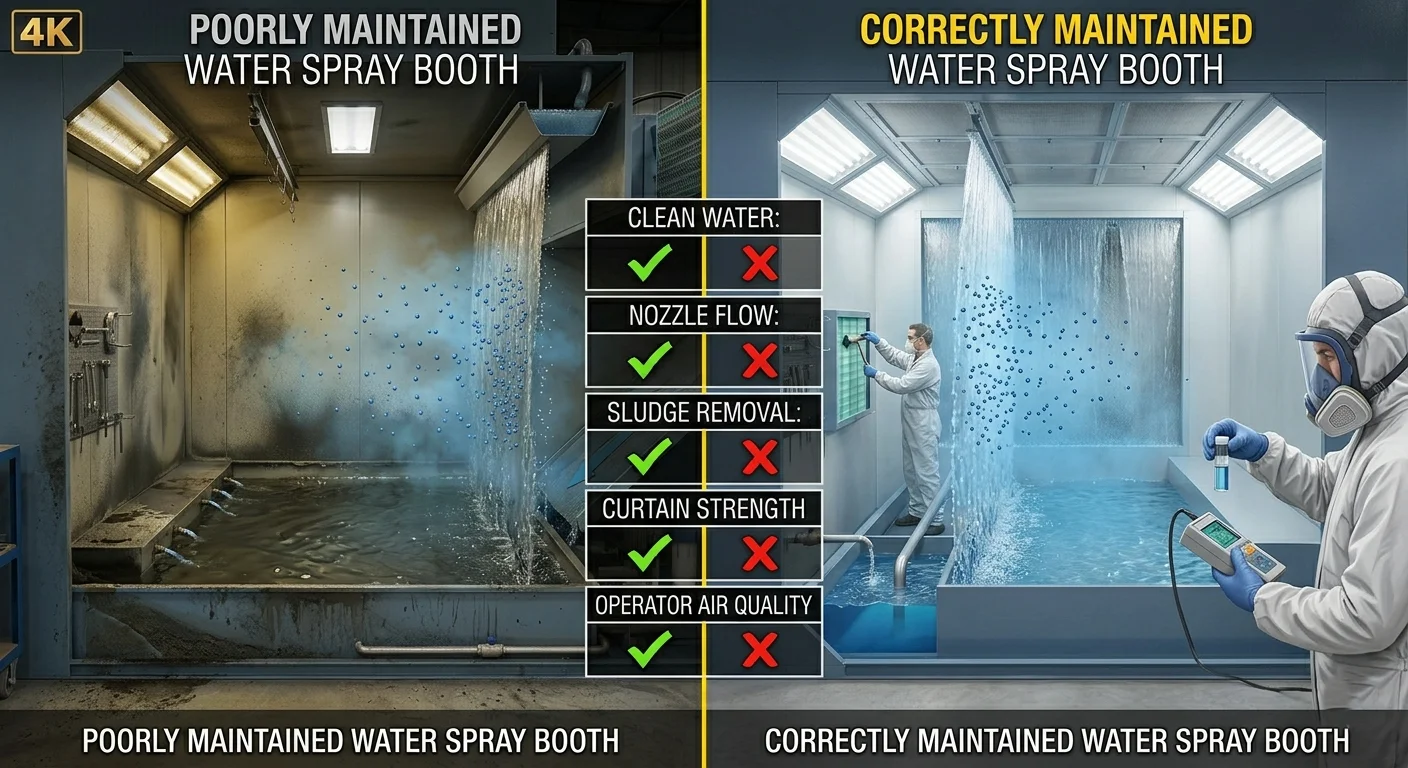
Preventive maintenance programs are often the most effective approach because they allow potential issues to be identified before they develop into costly repairs. Regular inspections, scheduled cleaning, component servicing, and performance testing help maximize equipment lifespan while minimizing downtime. Industries such as automotive manufacturing, furniture production, metal fabrication, machinery manufacturing, aerospace engineering, railway equipment production, and general industrial finishing all benefit from structured maintenance programs.
In the final paragraph, the Water Spray Booth requires routine maintenance including water quality monitoring, sludge removal, pump inspection, nozzle cleaning, airflow testing, fan servicing, booth cleaning, ductwork maintenance, electrical inspections, and automated system verification to ensure efficient overspray control, consistent paint quality, improved workplace safety, and reliable long-term industrial painting performance.
Conclusion
Proper maintenance is essential for keeping a Water Spray Booth operating efficiently and delivering consistent results. Regular cleaning, water management, equipment inspection, and preventive servicing help maintain overspray collection efficiency, improve coating quality, reduce downtime, and extend the lifespan of the system, making it a reliable solution for industrial painting operations.