Choosing the right dust collection system is essential for maintaining clean air, protecting workers, ensuring equipment reliability, and supporting efficient industrial operations. Since every facility has unique production processes and dust generation characteristics, selecting the most suitable dust collector requires careful evaluation of several important factors. A properly designed system can improve filtration performance, reduce maintenance requirements, lower operating costs, and provide long-term operational benefits. When investing in a Multi Bag Dust Collector, businesses should thoroughly assess their dust control needs to ensure the system delivers optimal efficiency and reliability.
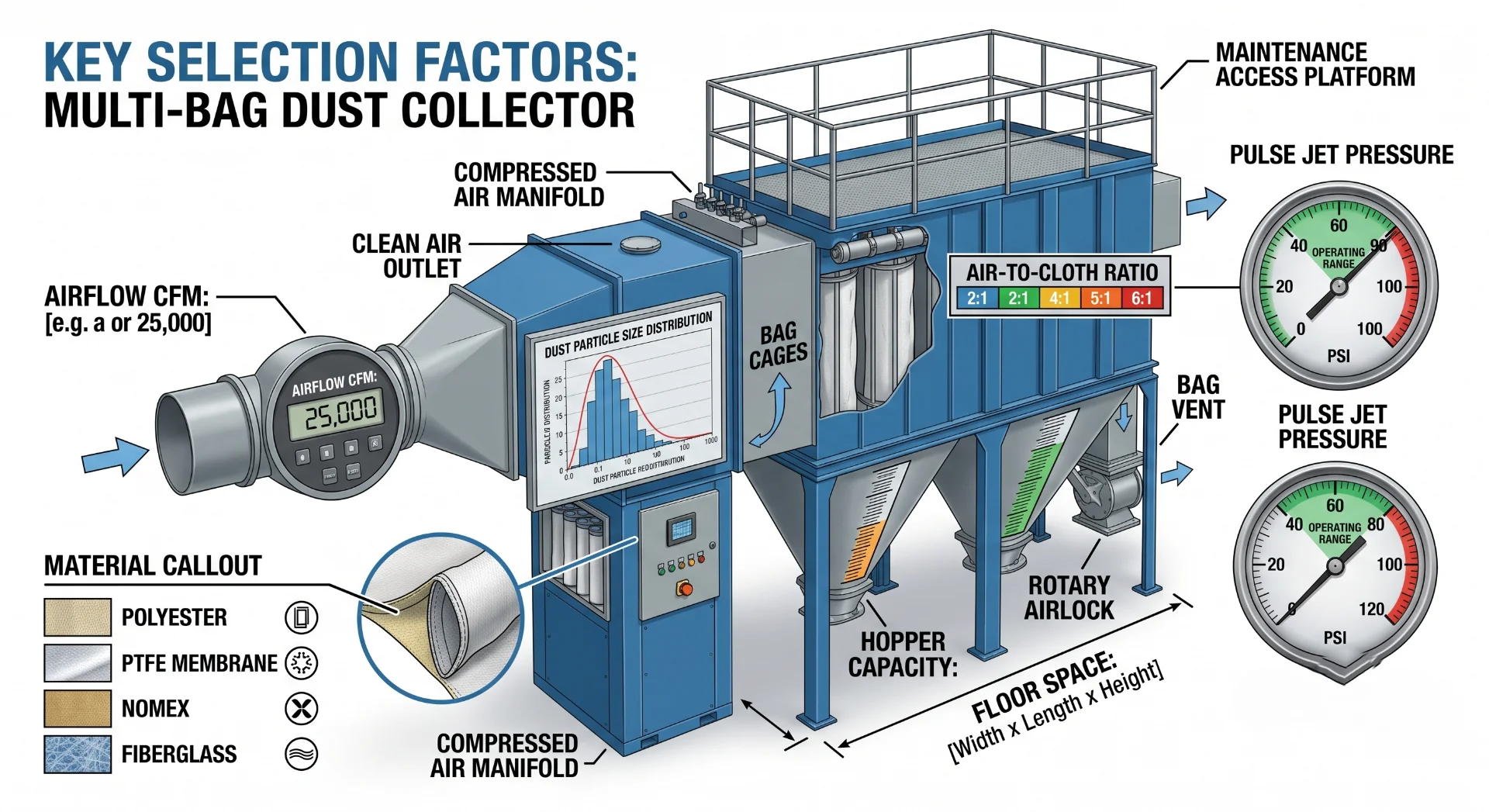
One of the most important factors to consider is the type of dust being generated. Different industrial processes produce dust with varying particle sizes, densities, moisture levels, abrasiveness, and chemical properties. Fine powdery dust may require high-efficiency filter media, while heavier particles may demand larger hopper capacities and specific airflow designs. Understanding the characteristics of the dust helps determine the most appropriate collector configuration and filter material.
Airflow requirements are another critical consideration. The dust collector must be capable of handling the volume of air generated by the production process while maintaining effective dust capture. Airflow is generally measured in cubic feet per minute (CFM) or cubic meters per hour (CMH). A system with insufficient airflow capacity may fail to collect dust effectively, while an oversized system can increase energy consumption and operating costs. Proper airflow calculations are essential for achieving efficient dust collection performance.
The amount of dust generated during production should also be carefully evaluated. Facilities that produce large quantities of dust require collectors with adequate filtration area and dust storage capacity. Multi bag dust collectors are often selected for high-dust applications because their multiple filter bags provide a larger filtration surface area. Choosing the correct collector size helps ensure consistent operation even during peak production periods.
Filter media selection plays a major role in overall performance. Different filter materials are designed to handle specific dust types, operating temperatures, and environmental conditions. High-quality filter bags improve dust capture efficiency, reduce maintenance frequency, and extend equipment lifespan. Selecting the appropriate filter media ensures reliable filtration and long-term operational effectiveness.
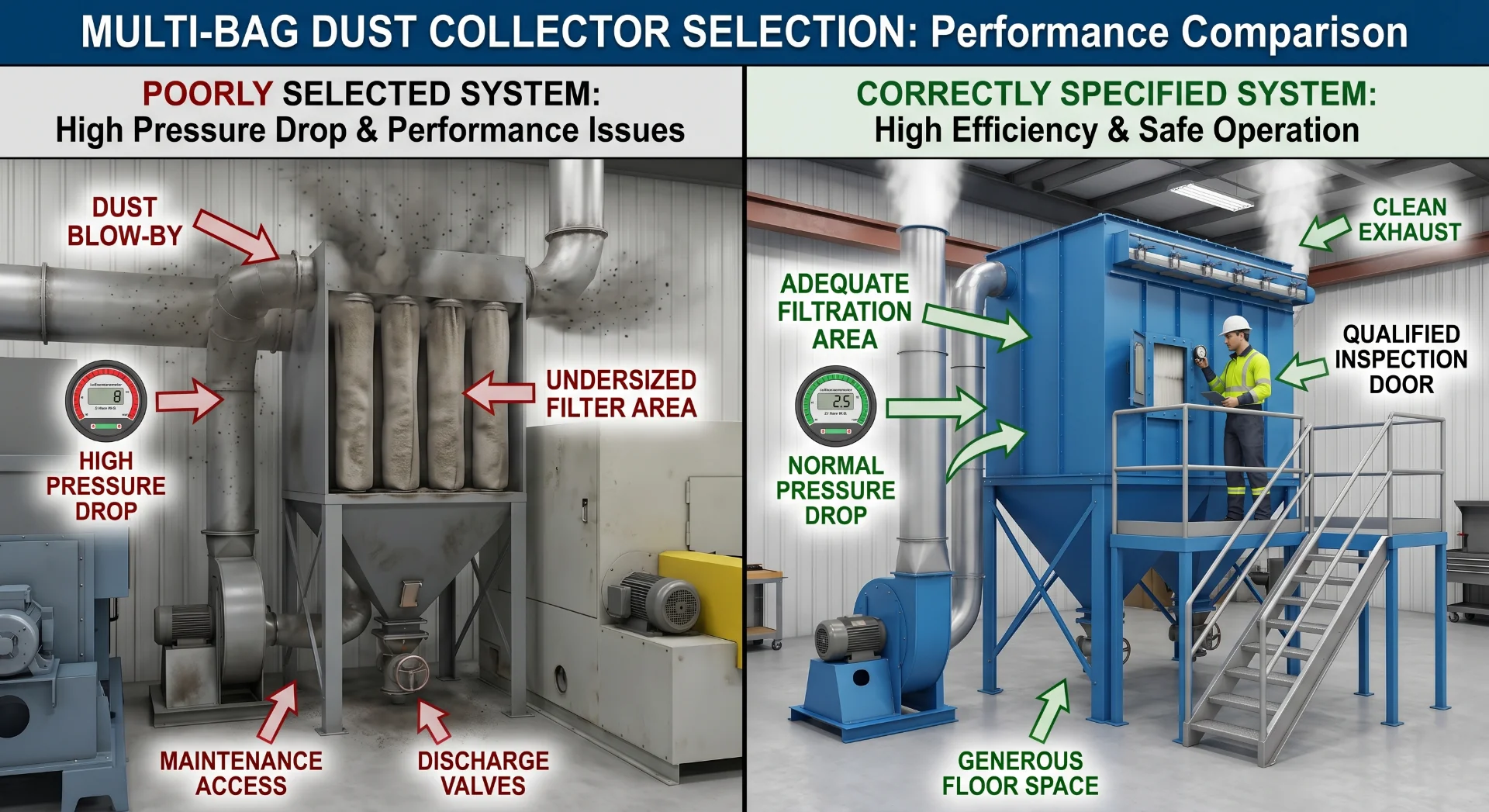
Another important factor is the filtration area provided by the collector. One of the key advantages of a multi bag dust collector is its large filtration surface. A larger filtration area helps reduce the air-to-cloth ratio, improves dust capture efficiency, lowers pressure drop, and extends filter life. Businesses should ensure that the collector offers sufficient filtration area to match their airflow and dust load requirements.
The filter cleaning system should also be considered carefully. As dust accumulates on the filter bags, periodic cleaning is necessary to maintain airflow and efficiency. Different collectors may use pulse jet cleaning, reverse air cleaning, or mechanical shaking systems. The effectiveness of the cleaning mechanism directly affects filtration performance, maintenance requirements, and operating reliability. Choosing a dependable cleaning system helps ensure long-term efficiency.
Dust storage and discharge capacity are equally important. The collector hopper should be large enough to accommodate the expected dust volume between cleaning or disposal cycles. Depending on operational needs, dust may be discharged through collection bins, screw conveyors, rotary airlock valves, or automated handling systems. Proper dust management helps prevent interruptions and supports continuous operation.
Available installation space must also be taken into account. Multi bag dust collectors come in different sizes and configurations, and sufficient room is required for installation, maintenance access, ductwork connections, and dust discharge equipment. Evaluating facility layout requirements beforehand helps ensure smooth integration with existing production processes.
Energy efficiency has become increasingly important for modern industrial facilities. Dust collectors operate continuously in many applications, making energy consumption a significant operating expense. Systems equipped with energy-efficient fans, optimized airflow designs, intelligent controls, and advanced filter media can help reduce power consumption while maintaining excellent filtration performance.
Maintenance requirements should be evaluated before making a purchasing decision. Regular servicing of filter bags, cleaning systems, fans, motors, hoppers, and dust discharge equipment is necessary to maintain performance. Equipment designed for easy maintenance can reduce downtime and simplify routine inspections. Access to replacement parts and technical support is also important for long-term reliability.
Workplace safety considerations should not be overlooked. Certain dust types may present respiratory, fire, explosion, or contamination hazards. The selected dust collector should include appropriate safety features and comply with relevant industry regulations. Proper dust containment, ventilation, and discharge systems contribute to a safer working environment.
Environmental compliance is another important factor. Many industries must meet air quality standards and emission regulations. Multi bag dust collectors help reduce particulate emissions by capturing dust before it is released into the atmosphere. Selecting a high-efficiency collector supports regulatory compliance and promotes environmentally responsible operations.
Future expansion plans should also be considered. Businesses expecting production growth may benefit from choosing a collector with additional capacity or modular design features that allow future upgrades. Planning for expansion helps protect the investment and reduces the need for costly equipment replacements later.
Modern multi bag dust collectors often include advanced features such as differential pressure monitoring, automated cleaning controls, remote monitoring capabilities, high-performance filter media, and intelligent operating systems. These technologies improve efficiency, reduce maintenance requirements, and provide greater control over dust collection performance.
Industries such as metal fabrication, woodworking, pharmaceuticals, food processing, agriculture, mining, cement manufacturing, chemical production, recycling, packaging, and general manufacturing all have unique dust control requirements. Carefully evaluating operational needs helps ensure that the selected collector provides the right balance of efficiency, reliability, safety, and cost-effectiveness.
In the final paragraph, the Multi Bag Dust Collector should be selected based on factors such as dust characteristics, airflow requirements, dust volume, filter media quality, filtration area, cleaning system efficiency, hopper capacity, available installation space, energy consumption, maintenance needs, workplace safety requirements, environmental compliance, and future production growth. Considering these factors carefully helps businesses choose a dust collection solution that delivers reliable performance, improved air quality, and long-term operational value.
Conclusion
Selecting the right Multi Bag Dust Collector requires a thorough understanding of dust generation, production demands, filtration requirements, and operational goals. By evaluating key factors such as airflow, filter quality, maintenance, safety, and scalability, businesses can invest in a system that improves workplace cleanliness, supports productivity, and provides dependable long-term dust control performance.