Selecting the right dust collection system is essential for maintaining clean air, protecting employees, ensuring equipment reliability, and supporting efficient industrial operations. Since different industries generate different types and volumes of dust, choosing the most suitable dust collector requires careful evaluation of several operational and technical factors. A properly selected system can improve filtration performance, reduce maintenance costs, enhance workplace safety, and provide long-term value. When considering a Shaker Dust Collector, businesses should assess their specific dust collection requirements to ensure the system delivers optimal performance and reliability.
One of the most important factors to consider is the type of dust being collected. Different industrial processes generate different dust characteristics, including particle size, density, abrasiveness, moisture content, and dust concentration. Fine dust particles may require specialized filter media to achieve effective filtration, while heavier dust may require larger collection hoppers and stronger airflow management. Understanding the properties of the dust helps ensure that the collector is designed for the intended application.
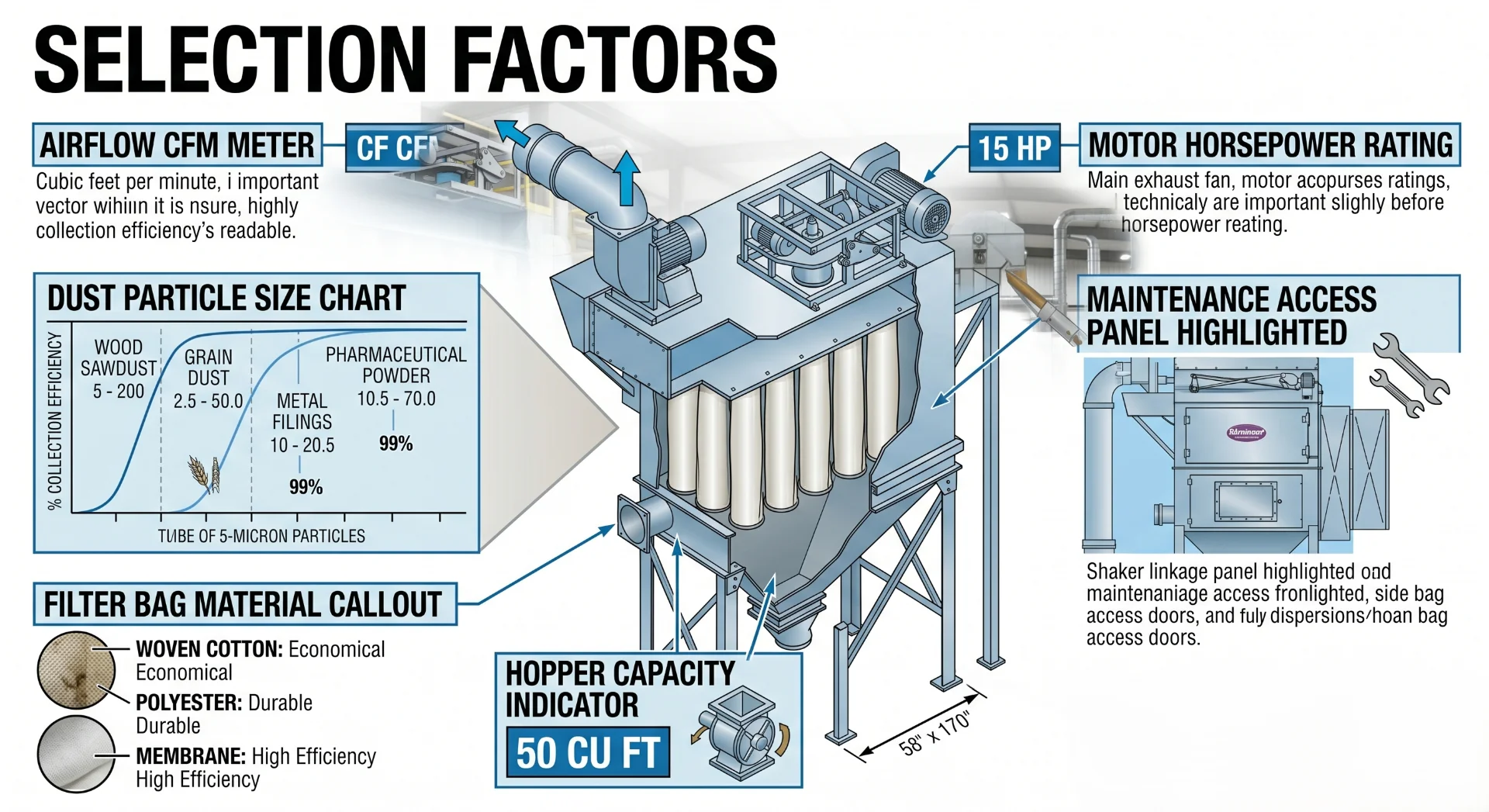
Airflow requirements are another critical consideration. The dust collector must be capable of handling the volume of air generated by the production process. Airflow is typically measured in cubic feet per minute (CFM) or cubic meters per hour (CMH). Selecting a system with insufficient airflow capacity can reduce dust capture efficiency, while an oversized system may increase energy consumption unnecessarily. Proper airflow calculations help ensure effective dust removal and efficient operation.
The amount of dust generated during production should also be evaluated carefully. Facilities that produce large quantities of dust require collectors with adequate filtration area and dust storage capacity. The collector should be capable of handling peak dust loads without excessive pressure drop or reduced performance. Understanding production conditions helps determine the appropriate system size and filter configuration.
Filter bag quality and filter media selection play a significant role in overall performance. Different filter materials are available for various dust types, temperatures, and operating environments. High-quality filter bags improve filtration efficiency, extend service life, and reduce maintenance requirements. Selecting the correct filter media helps ensure reliable operation and consistent dust collection performance.
Another important factor is the cleaning mechanism. Since shaker dust collectors rely on mechanical shaking to clean filter bags, the efficiency and durability of the shaker assembly should be assessed. A reliable shaking mechanism helps maintain airflow by effectively removing accumulated dust from the filter surface. Businesses should consider the quality of the cleaning system and its ability to support long-term operation.
Dust storage and discharge requirements should also be considered. The collector's hopper capacity must be sufficient to accommodate the expected dust volume between cleaning or disposal cycles. Depending on the application, dust may be discharged through collection bins, rotary airlock valves, screw conveyors, or automated handling systems. Selecting an appropriate dust removal method helps maintain uninterrupted operation.
Space availability within the facility is another key factor. Dust collectors come in various sizes and configurations, and installation requirements should be evaluated before purchase. Adequate space must be available for the collector itself, maintenance access, dust removal equipment, and airflow ducting. A well-planned installation helps improve efficiency and simplify maintenance activities.
Energy efficiency is becoming increasingly important for industrial operations. Although shaker dust collectors are generally simpler than some alternative systems, fan motors and airflow equipment still consume energy. Choosing energy-efficient components can help reduce operating costs while maintaining effective dust collection performance. Businesses focused on long-term savings should evaluate energy consumption during the selection process.
Maintenance requirements should also be assessed carefully. Regular inspection and servicing of filter bags, shaker assemblies, motors, fans, and dust discharge systems are necessary to maintain performance. Equipment designed for easy maintenance can reduce downtime and simplify routine servicing. Access to replacement parts and technical support is also important for long-term reliability.
Workplace safety considerations should not be overlooked. Certain types of industrial dust may present health, fire, or explosion hazards. The selected dust collector should include appropriate safety features and comply with applicable industry regulations. Proper ventilation, dust containment, and safe dust disposal practices contribute to a safer working environment.
Environmental compliance is another important factor. Many industries must meet air quality and emission standards established by local regulations. Selecting a dust collector that provides high filtration efficiency helps reduce particulate emissions and supports regulatory compliance. Effective dust collection also contributes to cleaner and more sustainable industrial operations.
Future production growth should be considered when selecting a system. Businesses planning expansion may benefit from choosing a dust collector with additional capacity or modular design features that allow future upgrades. This approach helps protect the investment and reduces the need for costly equipment replacement as production demands increase.
Modern shaker dust collectors may include advanced features such as automated shaker controls, differential pressure monitoring systems, improved filter media technologies, energy-efficient fans, and intelligent monitoring capabilities. These features can improve performance, reduce maintenance requirements, and enhance overall system reliability.
Industries such as woodworking, metal fabrication, food processing, pharmaceuticals, agriculture, cement manufacturing, chemical processing, recycling, packaging, and general manufacturing all have unique dust collection requirements. Evaluating operational needs carefully helps ensure that the selected collector provides the desired balance of performance, efficiency, safety, and cost-effectiveness.
In the final paragraph, the Shaker Dust Collector should be selected based on factors such as dust characteristics, airflow requirements, dust volume, filter media quality, cleaning mechanism efficiency, dust storage capacity, available space, energy consumption, maintenance needs, workplace safety, environmental compliance, and future production plans. Careful consideration of these factors helps businesses choose a dust collection system that delivers reliable performance, improved air quality, and long-term operational value.
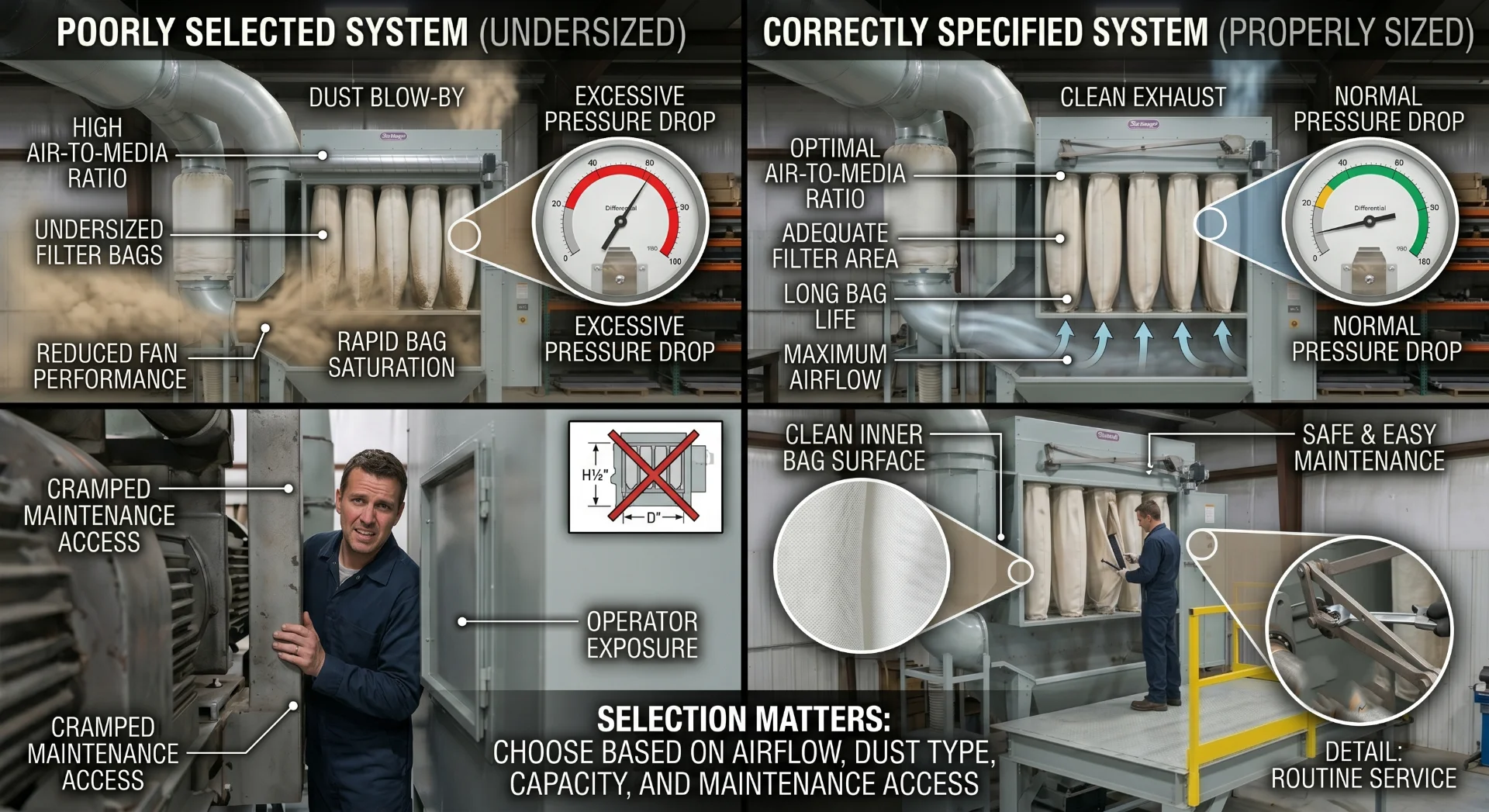
Conclusion
Choosing the right Shaker Dust Collector requires a thorough understanding of dust generation, filtration requirements, operational goals, and workplace conditions. By evaluating key factors such as airflow, filter quality, maintenance, safety, and scalability, businesses can invest in a system that improves dust control, supports productivity, and provides dependable long-term performance.