In industrial manufacturing and processing environments where grinding operations, chemical processing, mineral handling, combustion activities, fertilizer production, pharmaceutical manufacturing, metal treatment, and various industrial processes generate fine dust particles, harmful gases, smoke, chemical fumes, vapours, and airborne contaminants, maintaining proper air quality and controlling industrial emissions is essential for protecting worker health, improving workplace safety, reducing environmental pollution, and ensuring compliance with industrial air pollution regulations, and since many industrial operations release microscopic particulate matter, corrosive gases, toxic vapers, and hazardous airborne pollutants that are difficult to control using conventional filtration systems, industries require highly efficient air pollution control equipment capable of removing both fine particulate contaminants and gaseous pollutants before atmospheric discharge, and among the advanced industrial emission control systems widely used across manufacturing sectors, venturi scrubbers are highly preferred because of their exceptional fine-particle removal efficiency, gas absorption capability, and suitability for demanding industrial pollution control applications, and in the middle of improving industrial air quality and maintaining safer operational environments, the Venturi Scrubber system is commonly used in industries where fine dust removal, harmful gas control, smoke treatment, and reliable industrial emission management are essential for safe and efficient manufacturing operations.
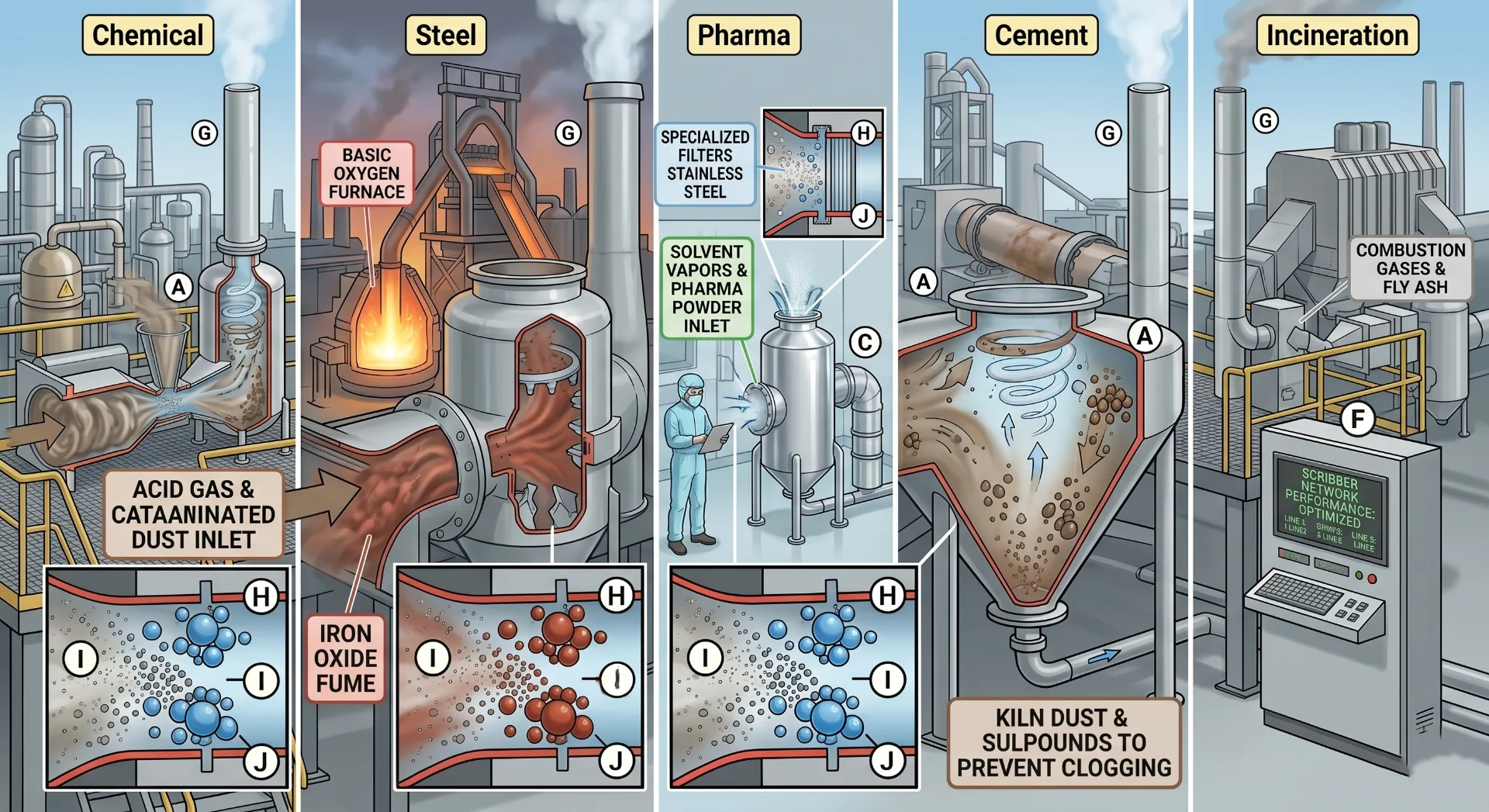
One of the major industries that commonly uses venturi scrubber systems is the chemical manufacturing industry, where chemical reactions, solvent handling, acid processing, and industrial production activities generate hazardous gases, corrosive vapers, chemical fumes, and airborne contaminants continuously during manufacturing operations. Venturi scrubbers help remove both fine particulate matter and harmful gases before industrial exhaust air is discharged into the atmosphere. Fertilizer manufacturing plants also widely use venturi scrubbers for controlling ammonia gas, sulphur compounds, phosphate dust, chemical vapers, and airborne particulate contaminants generated during fertilizer production and material handling operations. Pharmaceutical manufacturing industries commonly install venturi scrubbers for controlling chemical fumes, solvent vapers, powder particles, and process gases generated during drug production, chemical mixing, and industrial processing activities. Mining and mineral processing industries frequently use venturi scrubbers for controlling fine mineral dust, airborne particulate matter, smoke, and gaseous pollutants generated during crushing, grinding, screening, material transfer, and ore processing operations. Cement manufacturing industries commonly rely on venturi scrubbers for removing fine cement dust, kiln emissions, smoke particles, sulphur compounds, and airborne contaminants generated during clinker production and cement processing activities. Foundries and metal processing industries use venturi scrubbers for controlling metallic dust, grinding particles, furnace smoke, welding fumes, chemical vapers, and high-temperature industrial emissions generated during casting, melting, polishing, and metal finishing operations. Thermal power plants commonly install venturi scrubbers for controlling fly ash particles, sulfuric dioxide, smoke emissions, and airborne pollutants generated during combustion and power generation processes. Waste incineration plants and waste treatment facilities frequently use venturi scrubbers for controlling smoke, combustion gases, doors, fine particulate matter, and harmful airborne contaminants generated during waste processing and incineration operations. Petrochemical and refinery industries also use venturi scrubbers for controlling hydrocarbon vapours, smoke particles, chemical emissions, and corrosive gases generated during refining and chemical treatment processes. Pulp and paper industries commonly install venturi scrubbers for controlling sulphur compounds, process fumes, chemical vapers, and airborne contaminants generated during pulping, bleaching, and paper manufacturing activities. Food processing industries may use venturi scrubbers for door control, smoke treatment, and removal of airborne contaminants generated during cooking, roasting, fermentation, and industrial food production operations. Steel plants and heavy engineering industries frequently use venturi scrubbers for handling high-temperature emissions, fine metallic particles, and hazardous airborne contaminants generated during industrial manufacturing processes. One of the major reasons industries commonly use venturi scrubbers is their ability to remove extremely fine particulate matter and harmful gases simultaneously through high-velocity gas-liquid interaction technology. The systems are highly effective for handling sticky dust, moist contaminants, explosive particulate matter, and high-temperature industrial emissions that may create operational challenges for dry filtration systems. Venturi scrubbers also help industries maintain compliance with environmental pollution control standards and workplace safety regulations by reducing industrial emissions and improving operational air quality. Corrosion-resistant construction materials such as FRP, stainless steel, PVC, polypropylene, and industrial protective coatings improve durability and long-term operational reliability when handling corrosive gases and chemical contaminants. Advanced venturi scrubber systems may include mist eliminators, separator chambers, automated liquid circulation systems, recirculation pumps, pressure monitoring controls, chemical dosing arrangements, and high-efficiency liquid injection systems for improved industrial performance. Proper maintenance including liquid monitoring, nozzle cleaning, airflow inspection, pressure monitoring, separator servicing, and pump maintenance helps maintain reliable long-term contaminant removal efficiency and operational stability. In the final paragraph, the Venturi Scrubber system is commonly used in industries such as chemical manufacturing, fertilizer production, pharmaceutical processing, mining, cement manufacturing, foundries, thermal power generation, petrochemical refining, waste treatment, pulp and paper production, food processing, steel manufacturing, and heavy engineering where fine dust removal, harmful gas control, cleaner air quality, and reliable industrial emission treatment are essential for safe and efficient industrial operations.
Conclusion
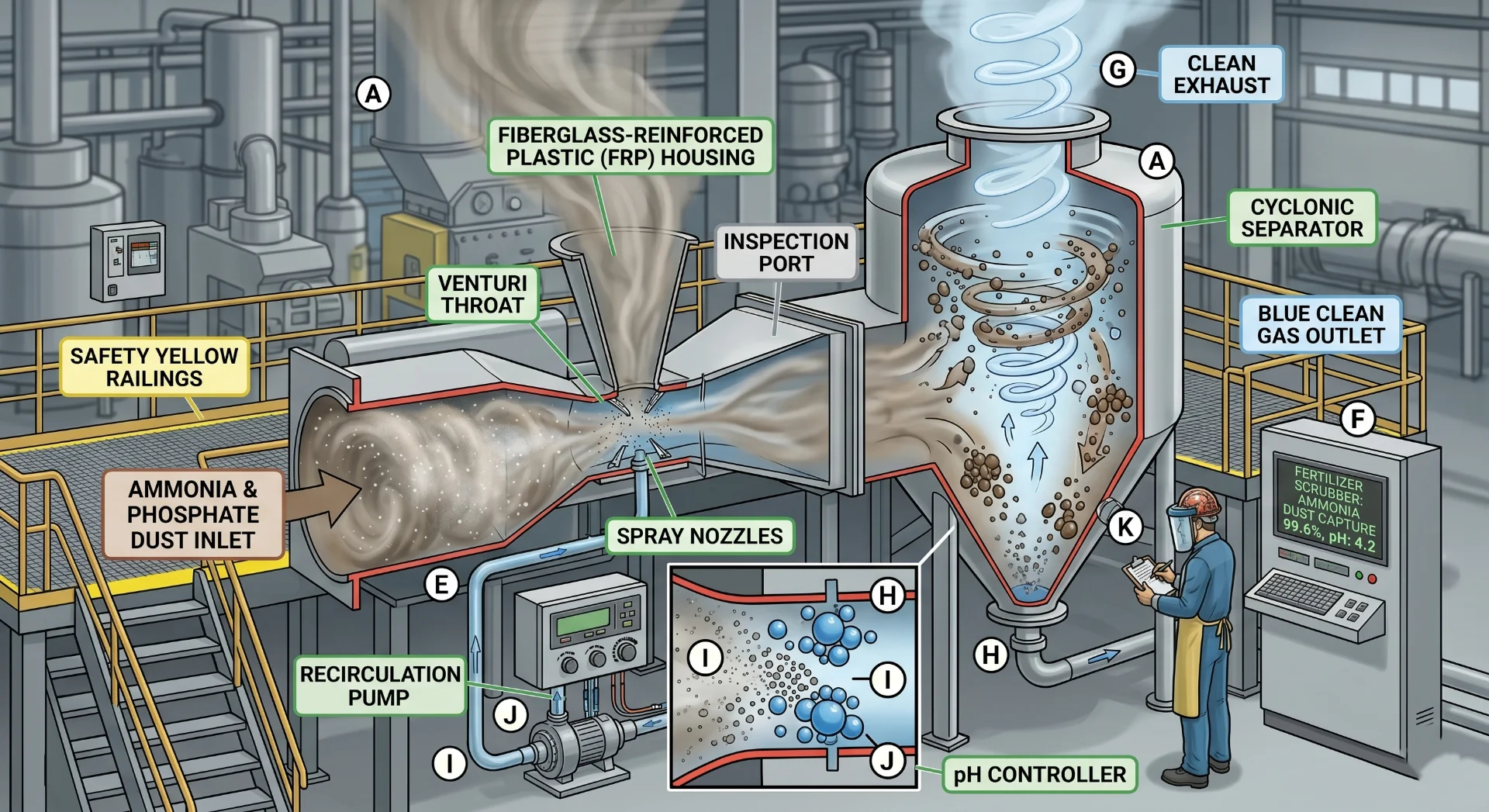
A venturi scrubber system is widely used across many industries because it provides highly efficient fine dust removal, harmful gas absorption, cleaner workplace air quality, reduced environmental pollution, improved worker safety, and reliable industrial emission control performance for demanding manufacturing and processing applications.