In industrial manufacturing environments where spray painting, powder coating, automotive refinishing, furniture finishing, machinery coating, and metal fabrication operations are performed regularly, maintaining consistent coating quality and ensuring worker safety are two of the most important objectives for manufacturers, and since painting processes generate paint overspray, airborne contaminants, dust particles, solvent vapours, fumes, and volatile organic compounds that can negatively affect surface finish quality and create health risks for workers, industries require controlled environments capable of minimizing contamination while maintaining safe working conditions, and among the most effective solutions used in modern finishing facilities, paint booths provide dedicated painting environments specifically designed to improve coating results and protect personnel from exposure to hazardous airborne substances, and in the middle of achieving professional finishing standards and maintaining safer industrial workplaces, the Paint Booths improve paint quality and workplace safety through controlled airflow, efficient filtration, overspray management, contaminant control, and proper ventilation systems.
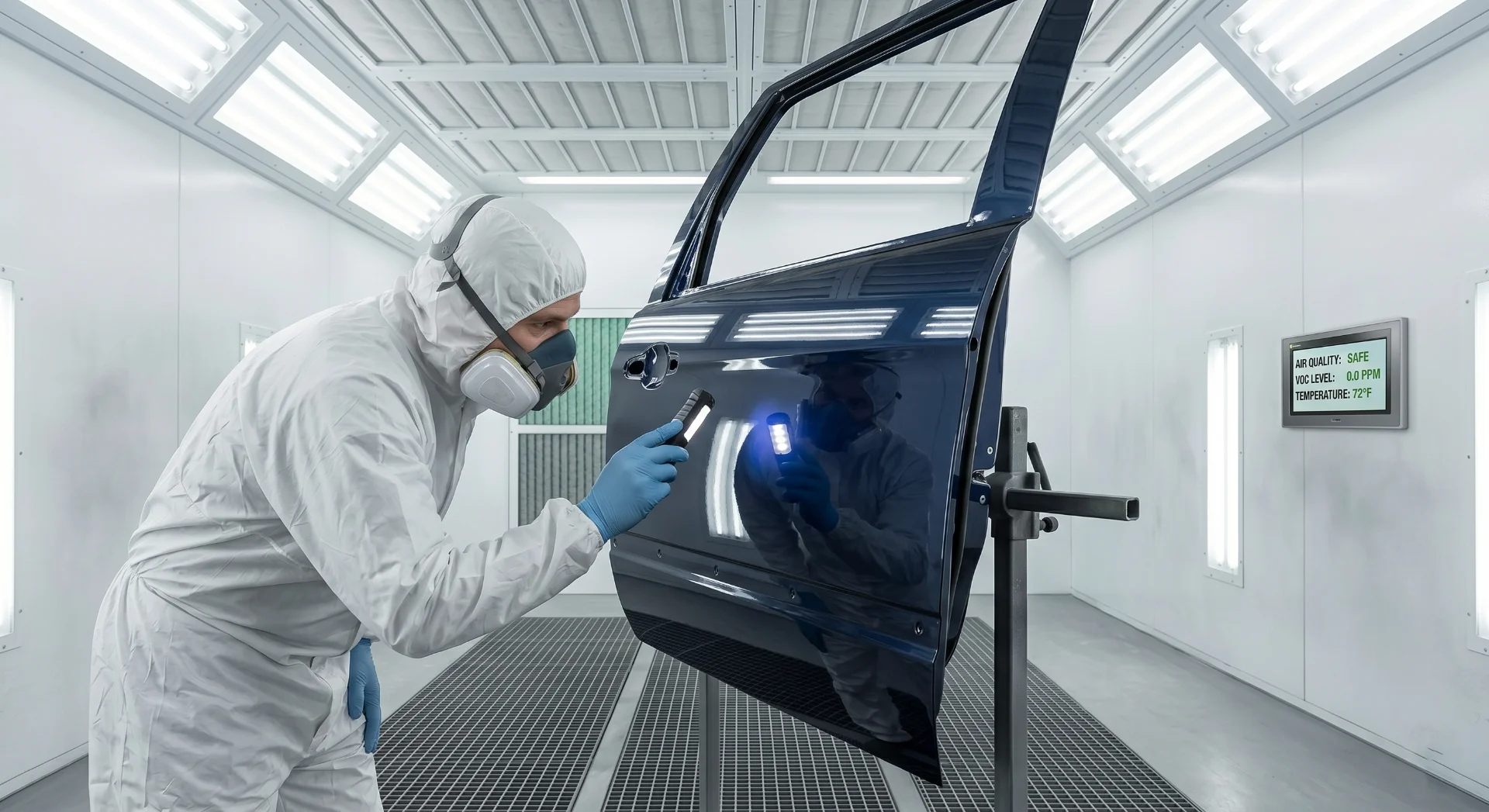
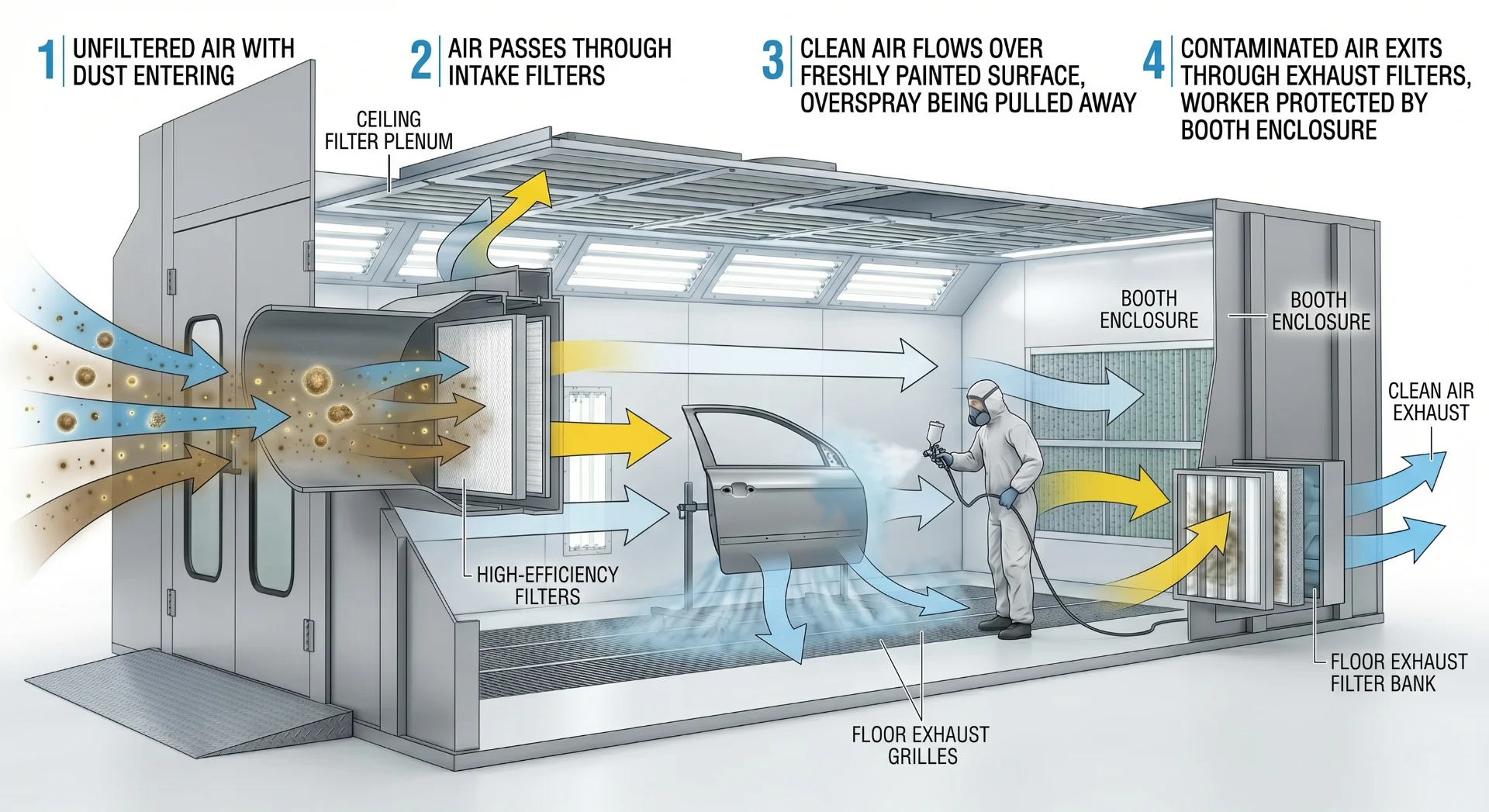
One of the primary ways paint booths improve paint quality is by creating a controlled environment that minimizes the presence of dust, dirt, and airborne contaminants during painting operations. In open work areas, contaminants can easily settle on freshly painted surfaces, causing defects such as rough textures, dust inclusions, uneven finishes, and coating imperfections. Paint booths use filtered airflow systems that continuously supply clean air into the painting environment while removing contaminated air through exhaust systems. This controlled airflow significantly reduces contamination and helps achieve smoother, more uniform coatings. Another important factor is overspray control. During spray painting, a portion of the paint does not reach the target surface and becomes airborne overspray. Paint booths are designed to capture this overspray using filtration systems or water wash technologies before it can settle on finished products or contaminate the surrounding environment. By effectively removing overspray, paint booths help maintain cleaner surfaces and improve overall finish quality. Consistent airflow patterns also contribute to improved coating performance because they help maintain stable spraying conditions throughout the painting process. Whether the booth uses cross-draft, side-draft, semi-down-draft, or full down-draft airflow, controlled air movement helps remove contaminants efficiently and supports uniform paint application. Improved visibility is another important benefit that directly affects paint quality. Paint booths are equipped with specialized lighting systems that provide bright, evenly distributed illumination across the work area. Better visibility allows painters to identify defects, monitor coating coverage, and apply paint more accurately, resulting in higher-quality finishes. Paint booths also support proper drying and curing conditions in certain applications. Some advanced booths include temperature and humidity control systems that help optimize coating performance and improve finish consistency. From a workplace safety perspective, paint booths play a critical role in protecting workers from exposure to potentially hazardous substances generated during painting operations. Spray painting often releases solvent vapours, chemical fumes, and fine paint particles into the air. Without proper ventilation, workers may inhale these contaminants, leading to health risks and reduced workplace safety. Paint booths use ventilation systems that continuously remove contaminated air and replace it with filtered fresh air, helping maintain safer breathing conditions for operators. The containment of hazardous materials within the booth also reduces the spread of contaminants throughout the facility, protecting other employees and nearby work areas. Fire safety is another important consideration because many paints, solvents, and coatings contain flammable substances. Paint booths are designed with safety features such as explosion-proof lighting, spark-resistant ventilation equipment, fire suppression compatibility, and controlled airflow systems that help reduce fire risks during painting operations. Cleaner work environments further improve safety by reducing slippery overspray accumulation on floors and minimizing clutter caused by airborne paint deposits. Regulatory compliance is also enhanced because paint booths help industries meet occupational health, environmental protection, and workplace safety standards. Modern paint booths may include advanced filtration technologies, intelligent airflow monitoring systems, automated controls, energy-efficient ventilation equipment, and environmental management features that further improve both paint quality and worker protection. Industries such as automotive manufacturing, aerospace production, furniture manufacturing, metal fabrication, heavy equipment manufacturing, and industrial machinery production depend heavily on paint booths to maintain high-quality finishing standards while ensuring safe working conditions. Regular maintenance including filter replacement, fan servicing, airflow testing, lighting inspection, and booth cleaning helps maintain optimal performance and long-term reliability. In the final paragraph, the Paint Booths improve paint quality and workplace safety by providing controlled painting environments with clean airflow, efficient overspray capture, contamination control, enhanced visibility, proper ventilation, and worker protection systems, helping industries achieve superior finishing results while maintaining healthier, safer, and more productive workplaces.
Conclusion
Paint booths play a vital role in improving both paint quality and workplace safety by controlling contamination, managing airflow, capturing overspray, and protecting workers from hazardous fumes and particles. Their ability to create clean, controlled painting environments makes them an essential component of modern industrial finishing operations.