Selecting the right dust collection system is a critical decision for any industrial facility. An efficient dust collector helps maintain clean air, improve workplace safety, protect equipment, reduce maintenance costs, and ensure compliance with environmental regulations. Since different industries generate different types of dust, choosing the most suitable system requires a careful evaluation of operational requirements and dust characteristics. When investing in a 2-Stage Cyclone Dust Collector, businesses should consider several important factors to ensure the system delivers reliable performance, high dust collection efficiency, and long-term value.
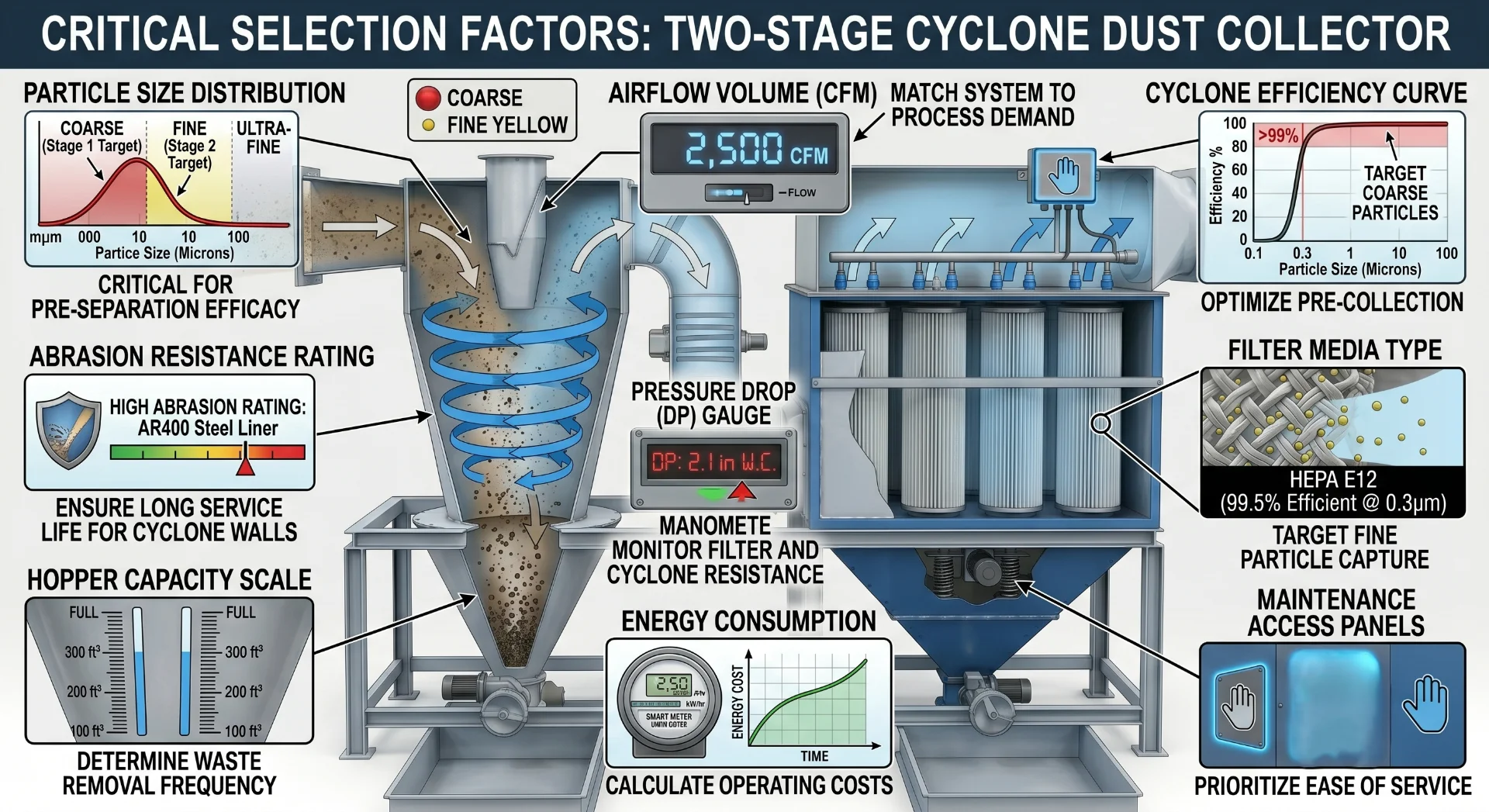
One of the first factors to evaluate is the type of dust being generated. Different industrial processes produce dust particles that vary in size, density, moisture content, abrasiveness, and chemical composition. Understanding these characteristics is essential because they directly influence the collector's performance. A properly selected system should be capable of handling the specific dust generated by the production process while maintaining consistent separation efficiency.
Particle size distribution is another crucial consideration. A 2-stage cyclone dust collector is designed to remove both coarse and fine particles through its dual-stage operation. However, the efficiency of the system depends on the proportion of large and small particles present in the air stream. Facilities that generate extremely fine dust may require high-performance filter media in the second stage to achieve the desired level of filtration.
Airflow requirements must also be calculated accurately. The dust collector should be capable of handling the volume of air generated by the facility while maintaining effective dust capture. Airflow is generally measured in cubic feet per minute (CFM) or cubic meters per hour (CMH). Choosing a system with inadequate airflow capacity can result in poor dust collection performance, while an oversized system may increase operating costs unnecessarily.
The amount of dust generated during production is another important factor. Facilities that produce high dust volumes require collectors with sufficient filtration area and dust storage capacity. One of the advantages of a 2-stage cyclone system is its ability to handle large dust loads efficiently. Proper sizing ensures the collector can maintain stable performance even during peak production periods.
The efficiency of the cyclone stage should be evaluated carefully. Since the first stage is responsible for removing larger particles before they reach the filters, an effective cyclone design significantly improves overall system performance. Factors such as cyclone diameter, inlet configuration, cone angle, and airflow velocity influence separation efficiency and should be considered during system selection.
Filter media quality is equally important because the second stage captures the fine dust particles that remain after cyclone separation. Different filter materials offer varying levels of filtration efficiency, temperature resistance, chemical compatibility, and durability. Selecting the appropriate filter media helps maximize dust removal performance while extending filter life and reducing maintenance requirements.
Pressure drop across the system should also be considered. Excessive pressure drop can reduce airflow and increase energy consumption. A well-designed 2-stage cyclone collector balances high separation efficiency with acceptable pressure levels. Lower pressure drop helps improve operating efficiency and reduces strain on fans and blowers.
Dust abrasiveness is another key factor, especially in industries such as mining, cement production, foundries, and metal processing. Abrasive particles can cause wear on cyclone surfaces, ductwork, and discharge equipment. In these applications, wear-resistant materials or protective linings may be necessary to ensure long-term durability and reliable operation.
Dust storage and discharge capacity should match the facility's production requirements. The collection hopper must be large enough to accommodate expected dust volumes between disposal cycles. Depending on the application, dust may be discharged through collection bins, screw conveyors, rotary airlock valves, or automated handling systems. Efficient dust management helps maintain uninterrupted operation.
Available installation space is another practical consideration. A 2-stage cyclone dust collector includes both cyclone separation and secondary filtration components, which may require more space than a standard cyclone system. Facilities should evaluate available floor space, ceiling height, maintenance access requirements, and ductwork routing before selecting a system.
Energy efficiency has become increasingly important for industrial operations. Dust collectors often run continuously, making power consumption a significant operational expense. Systems equipped with energy-efficient fans, optimized airflow designs, and advanced control systems can help reduce energy usage while maintaining excellent dust collection performance.
Maintenance requirements should be assessed carefully. Although 2-stage cyclone collectors reduce filter loading and extend filter life, regular inspection of cyclone chambers, filter media, hoppers, fans, motors, and discharge systems remains necessary. Choosing equipment designed for easy maintenance can reduce downtime and lower long-term operating costs.
Workplace safety is another critical factor. Dust can create respiratory hazards, fire risks, explosion hazards, and contamination concerns depending on the material being processed. The selected collector should include appropriate safety features and comply with relevant industry standards. Effective dust control contributes to a safer and healthier working environment.
Environmental compliance must also be considered. Many industries are subject to strict emission regulations and air quality standards. The superior filtration efficiency of a 2-stage cyclone dust collector can help facilities meet these requirements by reducing particulate emissions and improving overall environmental performance.
Future production growth should be included in the planning process. Facilities expecting expansion may benefit from selecting a collector with additional capacity or modular design features that allow future upgrades. Planning for future needs helps protect the investment and avoids costly equipment replacements later.
Modern 2-stage cyclone dust collectors often include advanced technologies such as pulse jet cleaning systems, differential pressure monitoring, automated cleaning controls, remote monitoring capabilities, high-efficiency filter media, and intelligent operating systems. These features help improve performance, reduce maintenance requirements, and increase operational reliability.
Industries such as woodworking, metal fabrication, cement manufacturing, mining, food processing, pharmaceuticals, agriculture, recycling, chemical production, power generation, and general manufacturing all have unique dust collection requirements. Carefully evaluating operational needs ensures the selected collector delivers the right combination of efficiency, durability, safety, and cost-effectiveness.
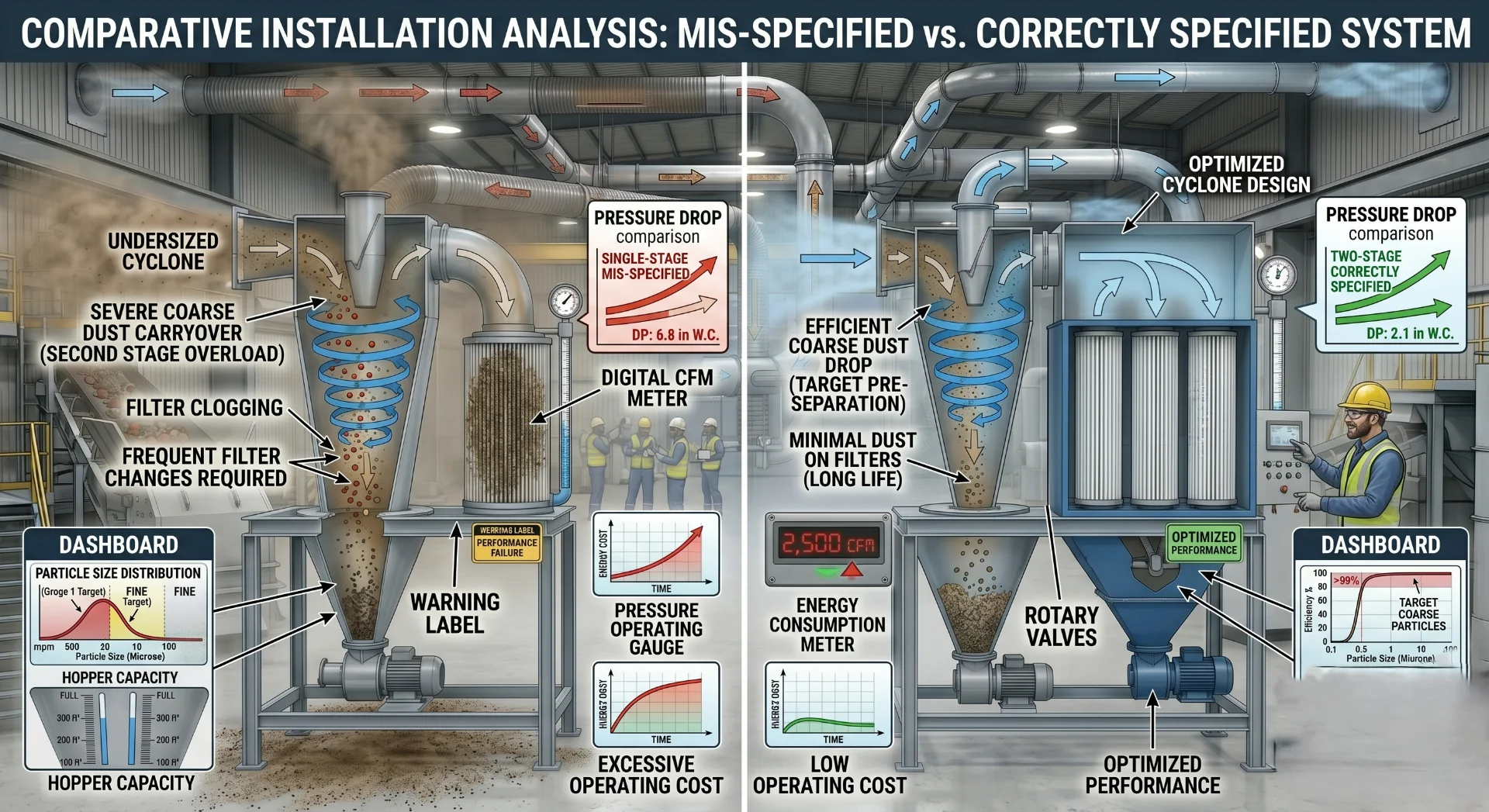
In the final paragraph, the 2-Stage Cyclone Dust Collector should be selected based on factors such as dust characteristics, particle size, airflow requirements, dust volume, cyclone efficiency, filter media quality, pressure drop, abrasiveness, hopper capacity, installation space, energy consumption, maintenance needs, workplace safety, environmental compliance, and future expansion plans. Considering these factors carefully helps businesses choose a system that provides reliable dust control, improved air quality, and long-term operational value.
Conclusion
Choosing the right 2-Stage Cyclone Dust Collector requires a thorough understanding of production processes, dust properties, and operational goals. By evaluating key factors such as airflow, filtration efficiency, durability, maintenance, and scalability, businesses can invest in a dust collection solution that delivers excellent performance, cleaner air, and dependable long-term results.