In industrial environments where welding, grinding, cutting, sanding, polishing, fabrication, finishing, and material processing activities generate dust, smoke, fumes, and airborne contaminants, selecting the right air extraction solution is essential for maintaining workplace safety, improving air quality, protecting equipment, and ensuring compliance with environmental regulations, and since every facility has different production requirements, workspace layouts, contaminant levels, and operational objectives, installing a dry suction wall without proper planning can result in inadequate extraction performance, higher operating costs, reduced efficiency, and future maintenance challenges, and therefore industries must carefully evaluate several technical and operational factors before investing in an extraction system, and among the important decisions involved in workplace air pollution control, selecting the appropriate Dry Suction Wall configuration plays a critical role in achieving effective dust and fume control, long-term reliability, and optimal operational performance.
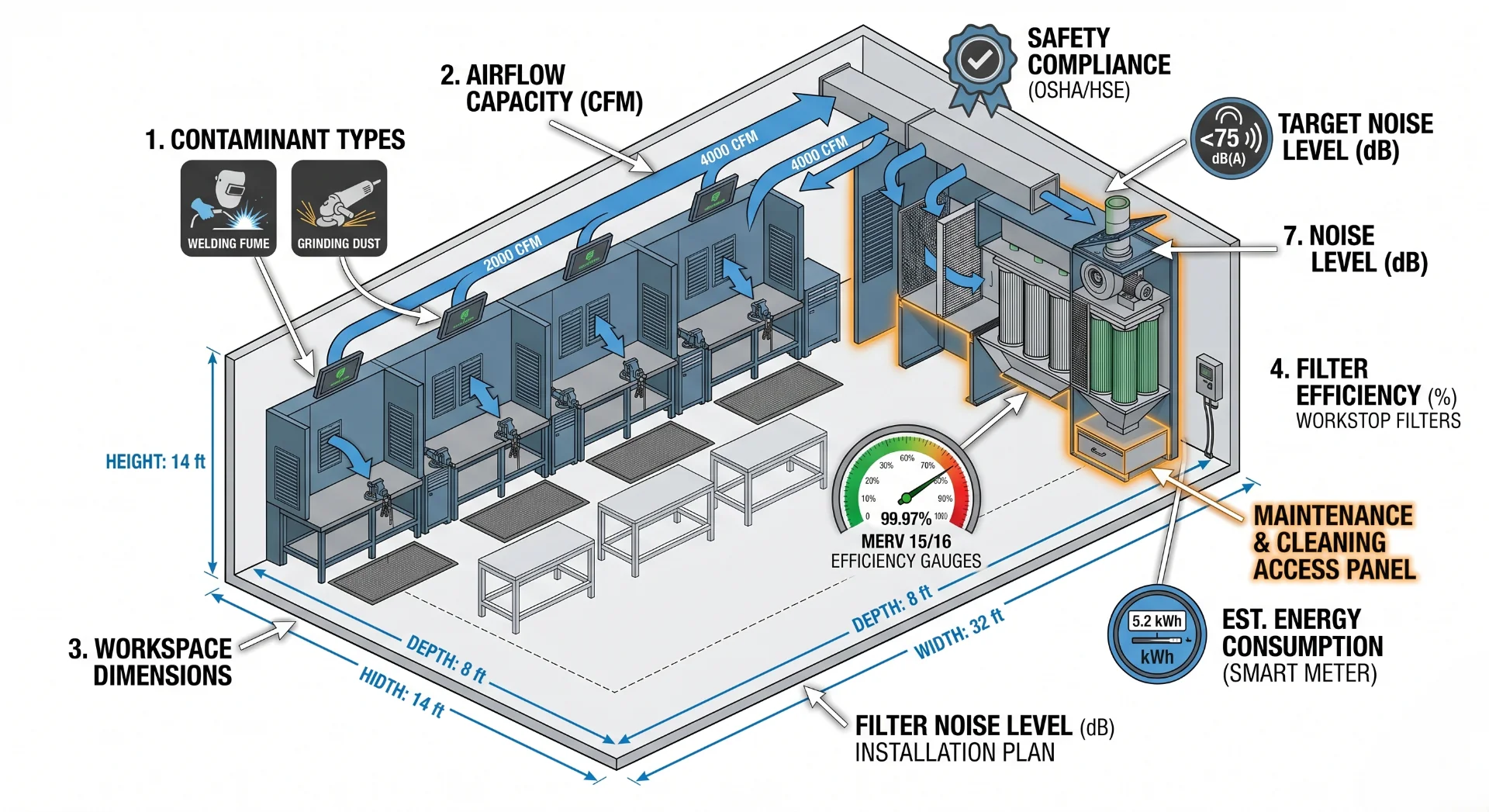
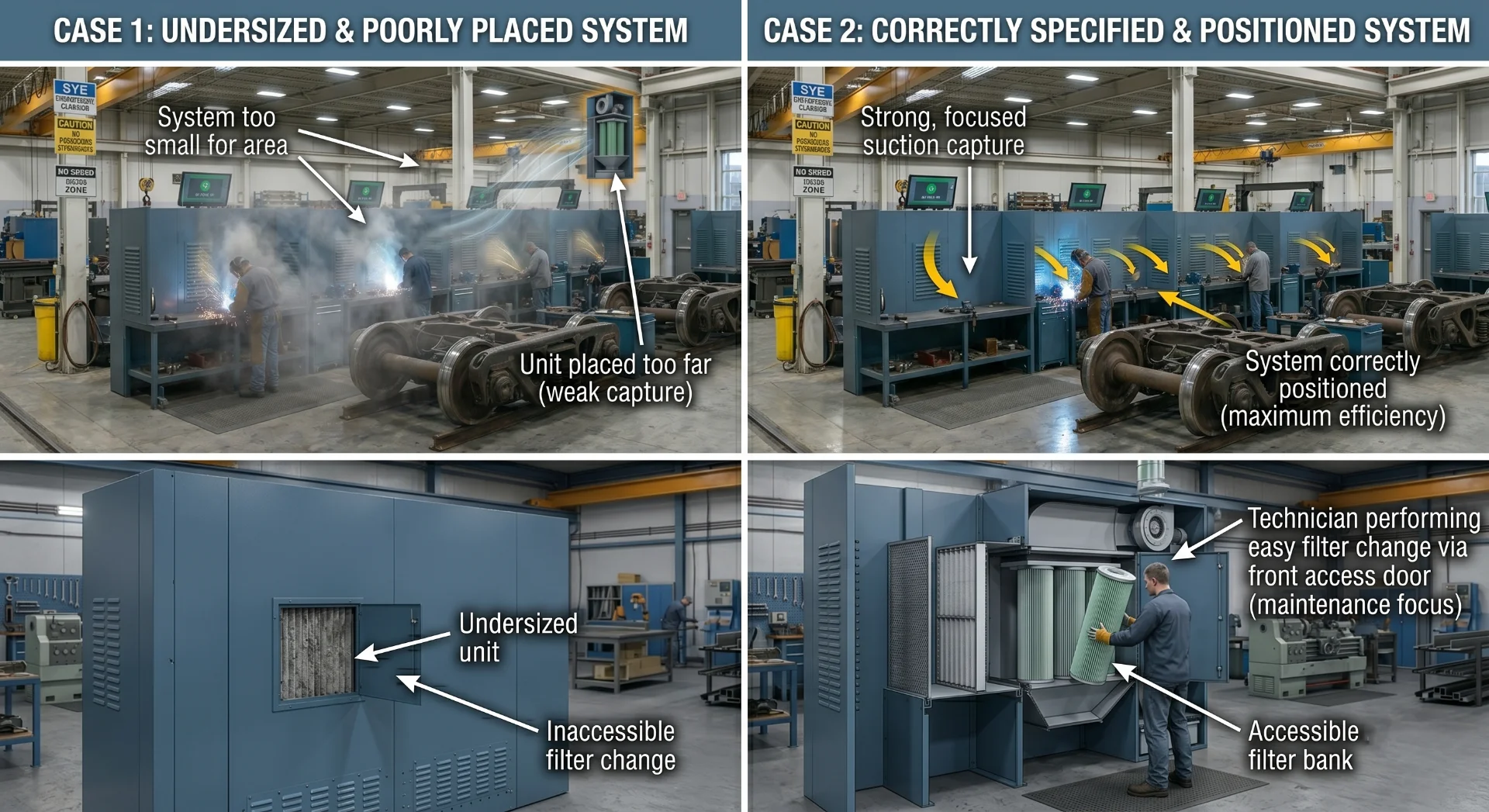
One of the first factors that should be considered before installing a dry suction wall system is the type of contaminants being generated within the facility. Different industrial processes produce different forms of airborne pollutants, including welding fumes, grinding dust, sanding particles, metal dust, wood dust, smoke, polishing residue, and other particulate matter. Understanding the characteristics, particle size, and volume of contaminants helps determine the required filtration efficiency and extraction capacity. Another important factor is airflow requirement because the system must generate sufficient suction to capture contaminants directly at the source before they spread throughout the workplace. The extraction airflow should be matched to the specific application and production environment to ensure effective contaminant removal. Workspace size and layout should also be evaluated carefully because the position of the dry suction wall significantly affects its performance. The system should be installed where contaminants are generated most frequently while allowing operators to work comfortably and maintain unrestricted access to equipment and workpieces. Workpiece size is another major consideration because industries handling large fabricated structures, machinery components, steel assemblies, or oversized products require dry suction wall systems with adequate extraction coverage and working space. Production volume should also be assessed because facilities operating continuously or generating high contaminant levels may require larger extraction systems with higher airflow capacity and advanced filtration technologies. Filtration efficiency is one of the most critical factors because the filtration system must effectively capture contaminants generated by the specific industrial process. High-quality filters help improve air quality, protect workers, and reduce contamination throughout the facility. Maintenance requirements should also be considered before installation. Filters, fans, and extraction components require periodic servicing to maintain reliable performance. Selecting a system with accessible filter compartments and simple maintenance procedures can help reduce downtime and operating costs. Energy consumption is another important factor because extraction systems often operate for extended periods each day. Energy-efficient motors, optimized airflow designs, and intelligent control systems can significantly reduce long-term operating expenses. Workplace safety requirements must also be evaluated carefully. The system should support compliance with occupational health standards and provide effective protection against airborne contaminants that may affect worker health. Noise levels are another practical consideration because high-capacity extraction systems can generate operational noise. Industries may prefer systems designed with noise-reduction features to improve workplace comfort. Future expansion plans should also be taken into account because production requirements may increase over time. Selecting a scalable system that can be upgraded or expanded later provides greater long-term flexibility and investment value. Environmental regulations are equally important because many industries must comply with air quality standards and emission control requirements. The dry suction wall should be designed to support regulatory compliance while maintaining effective extraction performance. Construction quality and durability should also be reviewed because industrial extraction systems operate in demanding environments and must withstand continuous use. Robust construction, corrosion-resistant materials, and high-quality components help ensure long-term reliability. Automation and monitoring capabilities may also influence system selection. Modern dry suction walls can include automatic filter cleaning systems, airflow monitoring devices, differential pressure sensors, variable speed drives, and intelligent control technologies that improve efficiency and simplify maintenance. Budget considerations remain important, but industries should evaluate total ownership costs rather than focusing solely on initial purchase price. Installation costs, maintenance expenses, energy consumption, productivity benefits, and equipment lifespan all contribute to overall value. Industries such as metal fabrication, automotive manufacturing, woodworking, aerospace production, railway engineering, heavy equipment manufacturing, industrial maintenance, and welding workshops often perform detailed site assessments before selecting an extraction solution. Proper planning and technical evaluation help ensure successful installation and reliable long-term operation. In the final paragraph, the Dry Suction Wall should be installed only after carefully considering factors such as contaminant type, airflow requirements, workspace layout, workpiece size, production volume, filtration efficiency, maintenance needs, energy consumption, workplace safety, noise levels, future expansion capability, environmental compliance, construction quality, automation features, and overall operational objectives to ensure efficient dust and fume extraction and long-term industrial performance.
Conclusion
Before installing a dry suction wall system, industries should carefully evaluate technical, operational, environmental, and safety requirements to ensure optimal performance. A properly selected and installed system helps improve air quality, enhance worker safety, reduce contamination, support regulatory compliance, and provide reliable long-term dust and fume control in industrial environments.